
Entrelac Raglan Jacket

Available as instant download
- Order number: 300
Raglanjacke im Entrelacmuster
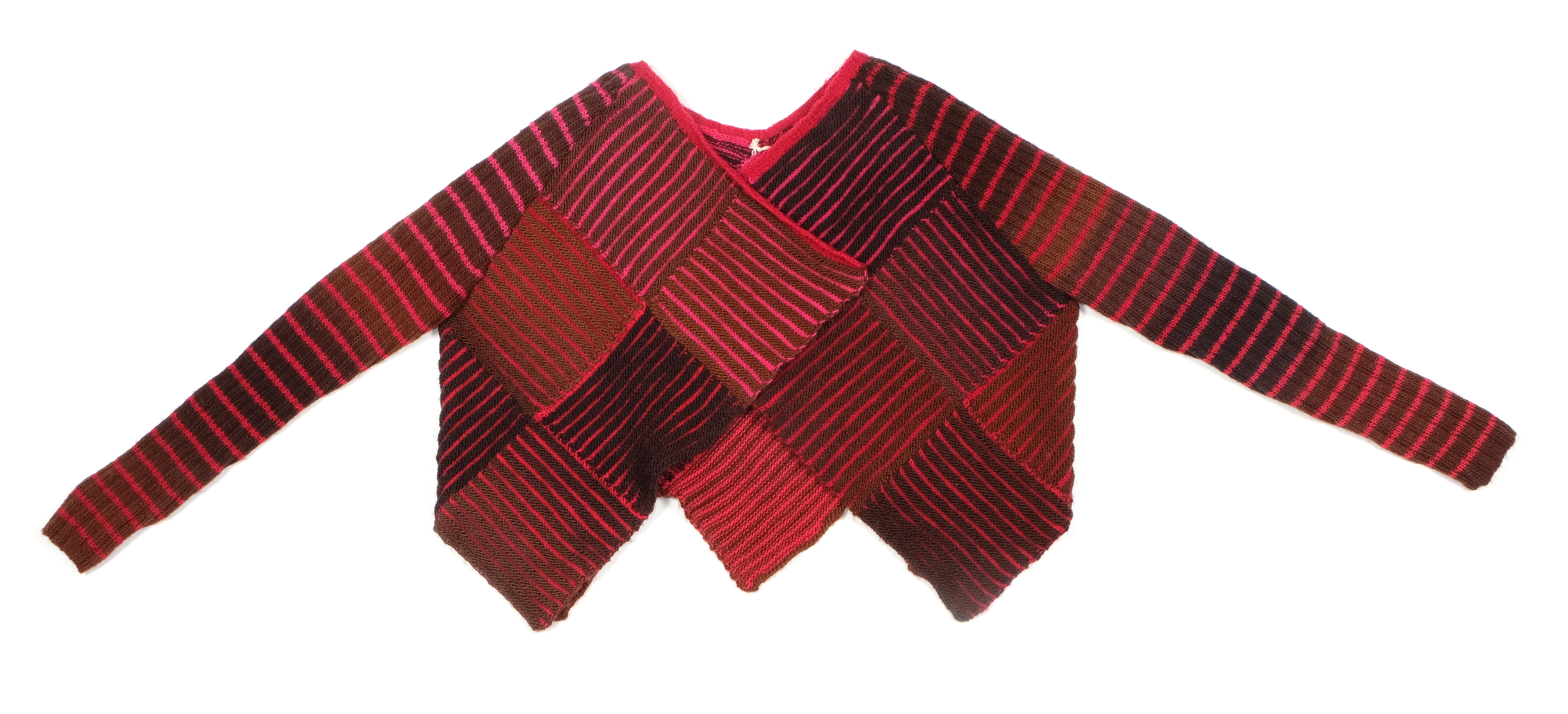
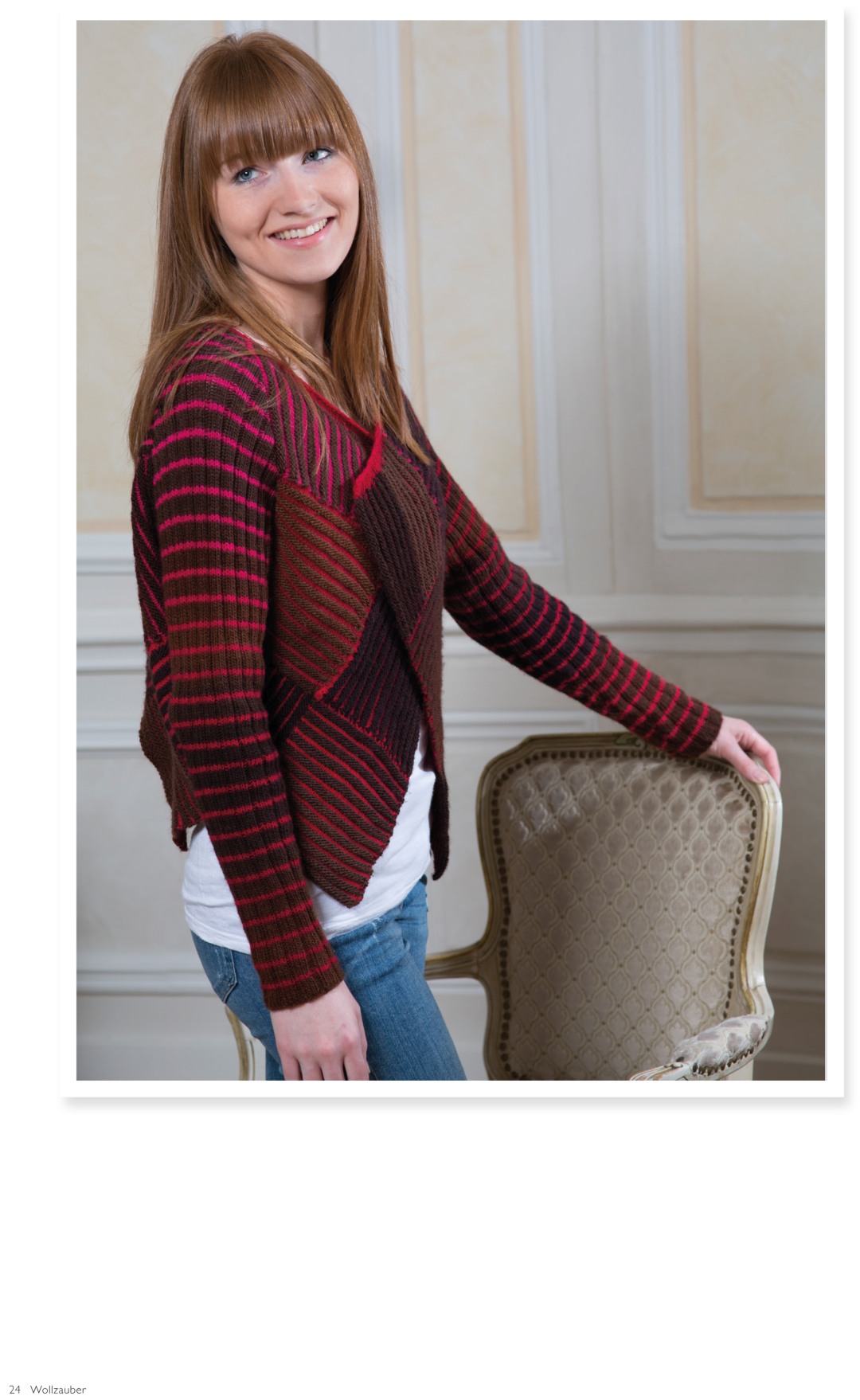
Strickanleitung für eine Raglanjacke im Entrelacmuster – ein echtes Statement-Teil für alle, die gerne mit Farben und Formen spielen!Die Jacke besteht aus vielen kleinen Entrelac-Feldern. Weil zwei Zauberbälle im Wechsel verstrickt werden, entstehen feine Streifen mit Rippenoptik, und jedes Feld bekommt seine eigene Farbe. Vorne überlappen sich die Teile wie bei einer Wickeljacke, und der Saum läuft in markanten Zipfeln aus. So wirkt die Jacke modern und lässig, zu Jeans genauso wie über einem schlichten Shirt. Die langen Raglanärmel nehmen die Streifen auf und runden das Gesamtbild harmonisch ab.
Die Anleitung ist für Größe S/M geschrieben. Sie stricken die Jacke mit Nadelstärke 3,5 aus je 200 g Zauberball®100 in zwei Farben. Das Originalmodell ist in "Heißes Eisen" und "Schokotatze" gearbeitet. Die Farbe "Schokotatze" ist leider nicht mehr erhältlich – kombinieren Sie "Heißes Eisen" einfach mit einem dunklen Farbverlauf Ihrer Wahl, damit die Streifen schön zur Geltung kommen.
Der Schwierigkeitsgrad der Anleitung ist schwer und deshalb nur für fortgeschrittene Stricker geeignet. Wer Entrelac schon kennt oder sich gerne an eine neue Technik wagt, wird mit einem außergewöhnlichen Lieblingsstück belohnt.
| Difficulty: |

|
| Needle size: | 3,5 |
| Material: | Zauberball®100, Zauberball®100 Pro |
| Size: | S M |
General safety information for yarns
1. Skin compatibility
Sensitive skin:
People with sensitive skin or allergies to animal fibers may react to natural yarns such as alpaca or wool with skin irritations. A test on a small area of skin is recommended before starting larger projects.
Unbleached natural fibers:
These may contain traces of natural substances that rarely trigger allergic reactions.
2. Dust and fiber pollution
Fine fibers:
When processing alpaca and wool, fine fibers can get into the air, which can irritate sensitive respiratory tracts. This can be a problem, especially in poorly ventilated rooms. Good ventilation or wearing a light mask is helpful when working for long periods.
Allergy sufferers:
Dust mites can build up in natural fibers, which could be a problem for allergy sufferers. Regular ventilation and storage in closed containers will help avoid this.
3. Fire hazard
Natural fibers:
Wool and alpaca are flame retardant, but they can char if in direct contact with an open flame. Avoid storing the yarn near candles or other sources of ignition.
Chemical treatments:
Yarns that have been chemically treated (e.g. superwash-treated wool) could burn more easily. Check the yarn label for information.
4. Storage and Pest Control
Protection from Moths:
Natural fibers such as wool and alpaca are susceptible to moth infestation. Store the yarn in airtight containers or bags and add lavender sachets or cedar wood to keep pests away.
Moisture:
Natural fibers attract moisture, which can lead to mold or unpleasant odors. Store the yarn in a dry place and avoid direct sunlight, which can weaken the fibers.
5. Care Instructions
Hand wash recommended:
Wool and alpaca are sensitive to heat and harsh cleaning products. Use special wool detergent and lukewarm water to avoid felting.
Do not wring:
Wringing wet yarn or knitted items can damage the fibers or change the shape. Instead, squeeze gently and let dry flat on a towel.
6. Safety when using tools
Knitting needles and crochet hooks:
Sharp or pointed needles can cause injury, especially if left lying around carelessly. Store tools safely, especially when children or pets are nearby.
Children:
Allow children to work with yarn only under supervision to avoid tangling or swallowing.
7. Environmental information
Dispose of waste properly:
Yarn scraps do not belong in organic waste, even if they are made of natural fibers, as they have often been treated (dyed, spun). Dispose of them in the residual waste or reuse the scraps creatively.
Manufacturer information
Hohenloher Wolle GmbH
Triftshäuser Str.5
74599 Wallhausen
Germany
Phone: +4979553006
Email: info@schoppel-wolle.de


